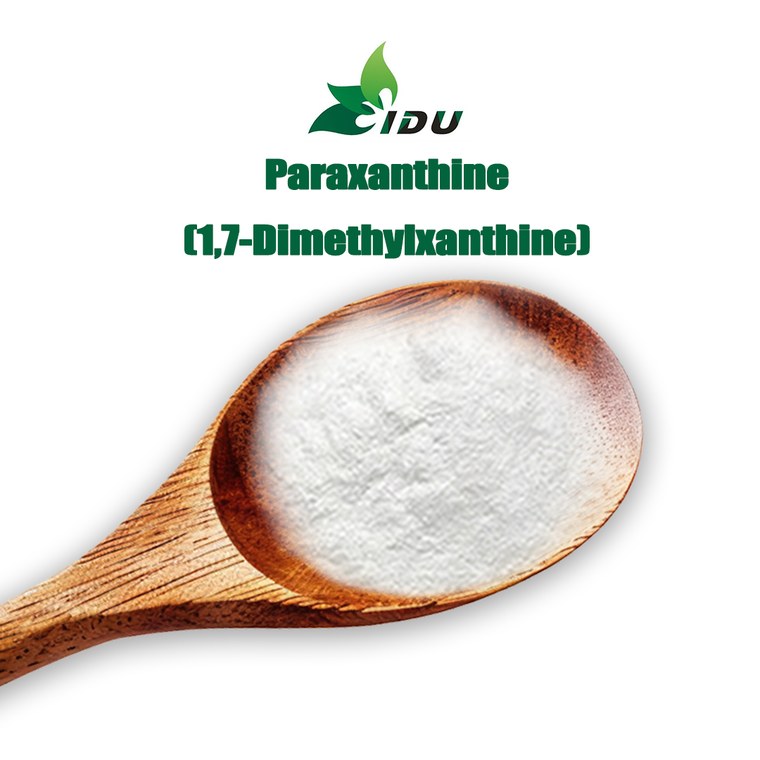
The Next Generation of Clean Energy & Cognitive Performance
As demand continues to grow for clean energy, mental focus, and sports performance, traditional caffeine is facing increasing challenges, including jitters, sleep disruption, tolerance, and individual differences in metabolism.
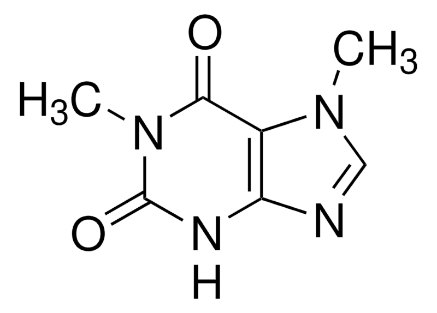
Paraxanthine (1,7-dimethylxanthine), the primary metabolite of caffeine in the human body, is emerging as a promising next-generation ingredient for energy and cognitive support. By delivering the key active metabolite directly, Paraxanthine is designed to provide the performance benefits associated with caffeine while offering a differentiated experience that has attracted growing interest from formulators and brands.
Naturally occurring in trace amounts in coffee and cocoa beans, Paraxanthine is produced when caffeine is metabolized by the liver enzyme CYP1A2 and represents approximately 84% of caffeine's metabolites. Direct supplementation with high-purity Paraxanthine bypasses the need for metabolic conversion, making it an innovative ingredient for energy, focus, and athletic performance applications.
| Test Item | Specification Standard | Test Method |
|---|---|---|
| Purity | 99.0 Min | HPLC |
| Loss on drying | 1.0% Max | USP |
| Residue on ignition | 1.0% Max | USP |
| Particle Size | 90% pass 30 mesh | USP |
| Heavy metals | 10ppm Max | Atomic Absorption |
| As | 1ppm Max | ICP-MS |
| Pb | 0.5ppm Max | ICP-MS |
| Cd | 0.5ppm Max | ICP-MS |
| Hg | 0.1ppm Max | ICP-MS |
| Microbiology Control | ||
| Total Plate Count | 1000 cfu/g Max | USP |
| Yeast & Mold | 100 cfu/g Max | USP |
Produced using advanced purification and precision crystallization technologies to achieve a consistent purity of ≥99.0%.
Every batch is rigorously tested for heavy metals, microbial limits, pesticide residues, and residual solvents to ensure consistent quality and compliance with international standards.
Manufactured in a cGMP-compliant facility with complete technical documentation available, including CoA, MSDS, TSE/BSE-Free Declaration, and Allergen Statement.
Featuring excellent powder flowability, Paraxanthine is well suited for a variety of dosage forms, including capsules, tablets, powders, gummies, and stick packs.
Paraxanthine acts through a mechanism similar to caffeine by antagonizing adenosine receptors (primarily A1 and A2A), promoting wakefulness, alertness, and mental focus. Preclinical studies suggest Paraxanthine may exhibit higher receptor affinity than caffeine.
Paraxanthine has a relatively short elimination half-life (approximately 3 hours), allowing for faster clearance than caffeine. This pharmacokinetic profile may help reduce prolonged stimulant effects later in the day while still supporting daytime energy and focus.
Research suggests that Paraxanthine supports cognitive performance by promoting attention, working memory, and mental focus. Preclinical studies also indicate potential neuroprotective properties that may contribute to long-term brain health.
Paraxanthine does not cause noticeable anxiety, palpitations, or tachycardia like caffeine does. Its unique mechanism of action (involving cGMP-PDE regulation) allows it to provide “Clean Energy” while offering greater cardiovascular safety and avoiding side effects such as nausea and diarrhea commonly associated with other methylxanthines.
Given its role in energy provision, anxiety relief, brain stimulation, fat burning, neuroprotection, and excellent pharmacokinetic safety, Paraxanthine has a wide range of applications. A typical recommended dosage of 100 to 300 milligrams per serving allows for a seamless and effortless replacement of caffeine in existing product lines:
Packaging specifications: 25 kg/fiber drum, or customized as per customer requirements
Storage conditions: Store in cool and dry place, in a tightly sealed container, keep away from strong light and heat.
Shelf life: 24 months.
Paraxanthine (1,7-dimethylxanthine) is CAS 611-59-6 (C7H8N4O2, MW 180.17), supplied at 99.0% minimum purity by HPLC.
Paraxanthine is the primary caffeine metabolite (about 84% of caffeine's metabolites), so it bypasses CYP1A2 conversion. It has a shorter elimination half-life of roughly 3 hours and, in research to date, does not produce the noticeable anxiety or palpitations associated with caffeine.
A typical serving is 100 to 300 mg, which allows a straightforward substitution for caffeine in existing pre-workout and nootropic product lines.
Complete technical documentation including CoA, MSDS, TSE/BSE-free declaration and allergen statement from a cGMP-compliant facility. Standard packaging is 25 kg fiber drums; contact idusc@aidubio.com for MOQ, pricing and delivery from our Los Angeles, CA warehouse.
Tell us the ingredient and volume you need. Our team will respond with pricing, lead time and documentation.