A stable, high-purity polyamine for autophagy and longevity formulations
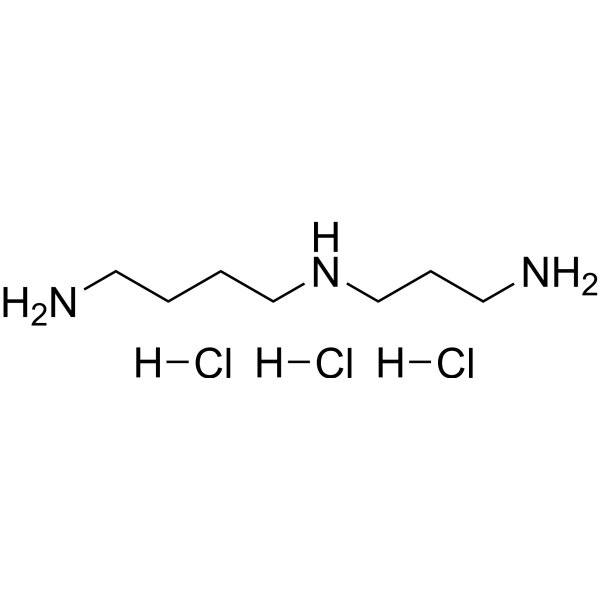
Spermidine trihydrochloride is the hydrochloride salt form of spermidine, a naturally occurring polyamine found in living organisms. It plays an essential role in cellular physiological processes and has been extensively studied for its involvement in cellular homeostasis and autophagy-related pathways. Compared to free-base spermidine, the trihydrochloride form offers enhanced chemical stability, improved handling characteristics, and greater suitability for industrial-scale formulation, making it an ideal raw material for dietary supplements, functional foods, and research applications.
| Test Items | Specifications | Test Method |
|---|---|---|
| Purity | 99.0% Min | GC |
| Solubility | Soluble in water | USP<1236> |
| Loss on drying | 1.0% Max | USP<731> |
| Residue on ignition | 0.2% Max | USP<281> |
| Heavy Metals | 10ppm Max | USP<233> |
| Pb | 0.5ppm Max | USP<233> |
| As | 0.15ppm Max | USP<233> |
| Hg | 0.1ppm Max | USP<233> |
| Cd | 0.5ppm Max | USP<233> |
| Microbiology Control | ||
| Total Plate Count | 1000cfu/g Max | USP<61> |
| Yeast&Mold | 100cfu/g Max | USP<61> |
A long-term prospective cohort study published in 2018 investigated the potential association between dietary spermidine intake and all-cause mortality. The study followed 829 participants aged 45 to 84 over a period of 20 years, analyzing their habitual dietary spermidine intake and mortality outcomes.
Participants were categorized into three groups based on daily spermidine intake: low intake (< 62.2 μmol/day), moderate intake (62.2–79.8 μmol/day), and high intake (> 79.8 μmol/day). During the follow-up, a total of 341 deaths were recorded, including 137 cardiovascular-related deaths, 94 cancer-related deaths, and 110 deaths from other causes.
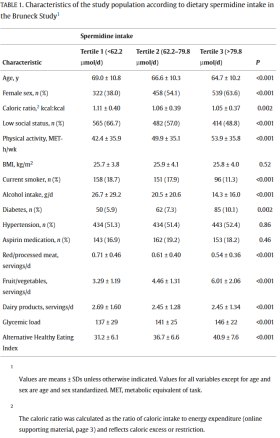
The crude mortality rates observed across the low-, moderate-, and high-intake groups were 40.5%, 23.7%, and 15.1%, respectively. These findings indicate a significant inverse association between dietary spermidine intake and all-cause mortality.
The mortality risk difference between individuals with the highest and lowest spermidine intake mirrors the survival advantage associated with being 5.7 years younger, providing evidence that long-term spermidine consumption contributes to longevity.
*Data source: Kiechl, S., Pechlaner, R., Willeit, P., et al. (2018). Higher spermidine intake is linked to lower mortality: a prospective population-based study. The American Journal of Clinical Nutrition, 108(2), 371–380. https://doi.org/10.1093/ajcn/nqy102
Packaging: 1 kg/aluminum foil bag, or customizable upon request
Storage Conditions: Keep tightly sealed and protected from light. For long-term storage, recommended temperature is 2–8°C in a cool, dry place.
Shelf Life: 24 months.
The HCl salt form offers greater chemical stability and handling characteristics than the free base, making it far better suited to industrial-scale formulation and long-term storage.
Spermidine trihydrochloride is CAS 334-50-9, supplied at 99.0% minimum purity by GC, as a white to off-white crystalline powder freely soluble in water.
Spermidine 3HCl is a high-purity synthetic salt for precise dosing, while Supermidine™ is a naturally extracted wheat germ product for clean-label positioning. Both are available; the choice depends on your label claims and dosing strategy.
Batch COA against USP methods, plus non-GMO, allergen-free and gluten-free declarations. Material ships from China or our Los Angeles, CA warehouse; contact idusc@aidubio.com for MOQ and pricing.
Tell us the ingredient and volume you need. Our team will respond with pricing, lead time and documentation.