The reduced coenzyme at the center of mitochondrial energy metabolism
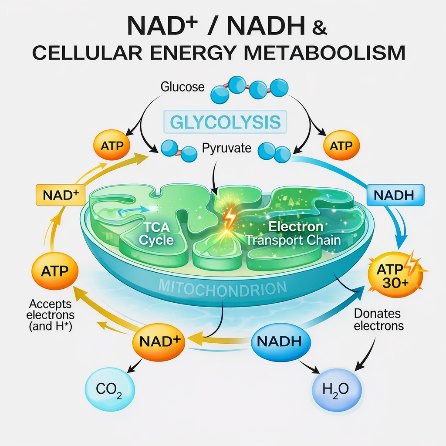
NADH (the reduced form of NAD⁺) is a vital coenzyme central to cellular energy metabolism. It functions as an essential electron carrier in mitochondrial respiration, driving ATP synthesis during oxidative phosphorylation. By transferring electrons to Complex I, it supports key metabolic pathways like glycolysis and the TCA cycle.
The balance of NAD⁺/NADH is crucial for energy production, neurological function, and metabolic health. This makes NADH increasingly valuable in the nutraceutical sector, with applications focused on supporting energy metabolism, cognitive health, anti-fatigue formulations, and anti-aging supplements. As research into mitochondrial health advances, NADH is becoming a key ingredient in premium supplements designed to enhance cellular energy and metabolic resilience.
| Test Items | Specifications | Test Method |
|---|---|---|
| Purity | 99% Min | HPLC |
| Assay (Dry Basis) | 99% Min | HPLC |
| Sodium Content | 5.5%-7.5% | IC |
| Water | 8.0% Max | KF |
| PH | 7.0-10.0 | PH meter |
| Pb | 1ppm Max | ICP-MS |
| As | 1ppm Max | ICP-MS |
| Hg | 0.1ppm Max | ICP-MS |
| Cd | 0.5ppm Max | ICP-MS |
| Heavy Metals | 10ppm Max | ICP-MS |
| Microbiology Control | ||
| Total Plate Count | 1000cfu/g Max | GB4789.2 |
| Moulds & Yeast | 100cfu/g Max | GB4789.15 |
NADH directly donates electrons to Complex I of the mitochondrial electron transport chain, facilitating ATP synthesis and enhancing cellular bioenergetics. As a core molecule in mitochondrial energy metabolism, NADH participates in Complex I of the electron transport chain, directly powering ATP synthesis. Studies have demonstrated that restoring the mitochondrial NADH oxidation capacity via NDI1 (NADH dehydrogenase) can significantly improve the cellular energy metabolic state [1, 9]. The mitochondrial electron transport chain couples NADH oxidation with proton pumping across the inner membrane, and the resulting electrochemical gradient is utilized by H+-ATP synthase to synthesize ATP [9]. When each molecule of NADH is oxidized within mitochondria, it drives the production of multiple ATP molecules, serving as the "powerhouse" of cellular energy.
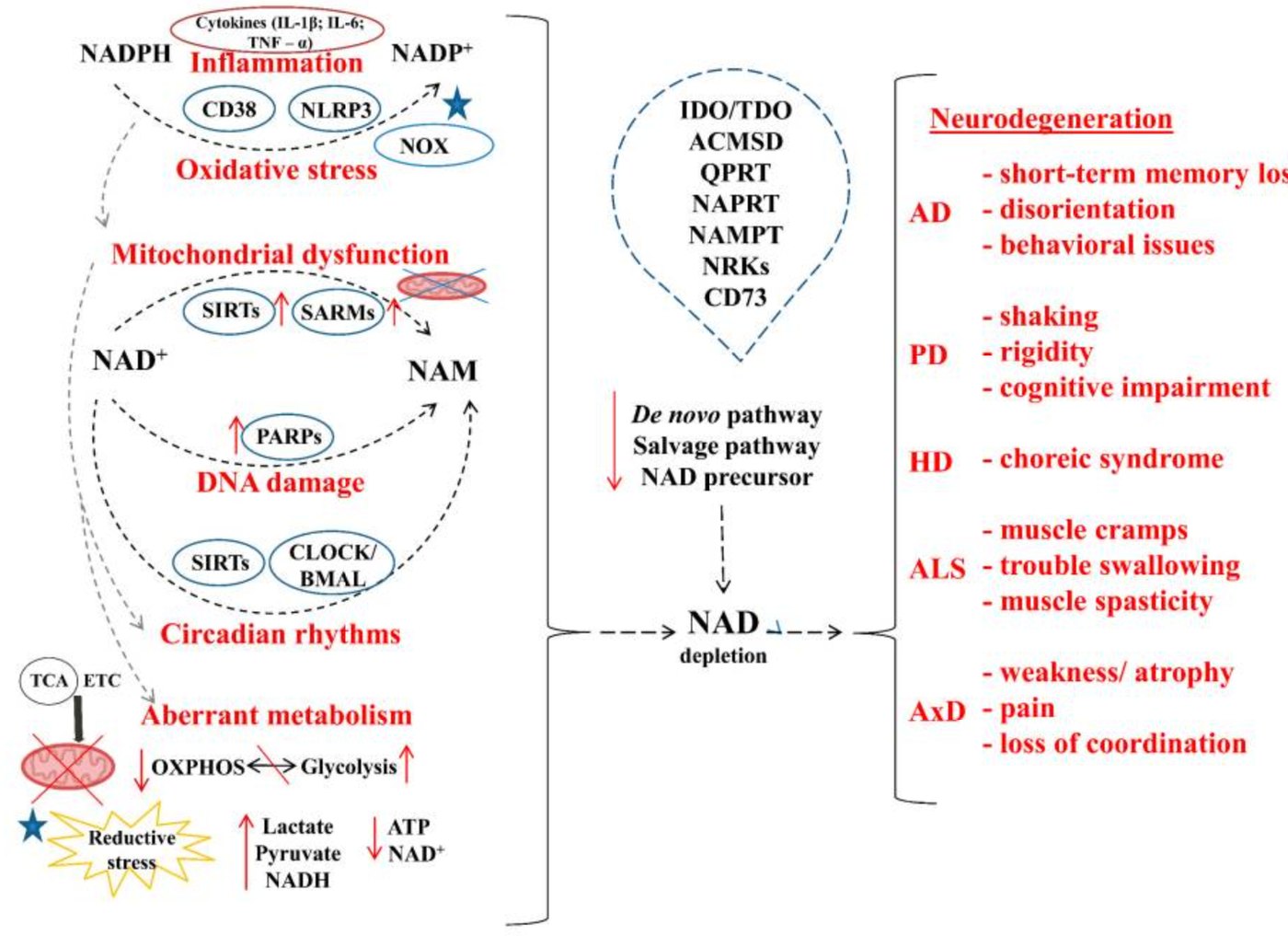
NADH plays a pivotal role in regulating the intracellular NAD⁺/NADH ratio, supporting oxidative stress management, and providing cellular protection. The intracellular NAD⁺/NADH ratio is crucial for the regulation of redox reactions, and the balance between these two forms is essential for efficient energy metabolism, being regulated by the activity of lactate dehydrogenase, the malate-aspartate shuttle, and the glycerol-3-phosphate shuttle [7]. Studies have shown that dysregulation of the NAD⁺/NADH ratio is closely associated with the aging process, including age-related neurodegenerative diseases and progressive cognitive decline [7].
Research in Arabidopsis thaliana has revealed that the mitochondrial glycerol-3-phosphate shuttle is involved in maintaining cellular redox homeostasis, with mutants exhibiting an elevated NADH/NAD⁺ ratio and altered reactive oxygen species (ROS) homeostasis [2]. Preserving the NAD⁺/NADH balance is vital for the cellular antioxidant defense mechanisms, the maintenance of calcium homeostasis, and cell survival.
NADH participates in neurotransmitter synthesis pathways and has been incorporated into formulation research aimed at enhancing mental clarity and alleviating fatigue. NAD⁺ and its reduced form, NADH, are of particular importance to brain cells, as the central nervous system heavily relies on ATP availability to maintain brain plasticity [7]. NAD⁺, NADH, and their metabolites exert significant effects on synaptic plasticity, cell death, neurogenesis, angiogenesis, as well as intercellular communication and the rearrangement of intracellular signaling pathways [7].
A double-blind, placebo-controlled clinical study demonstrated that stabilized NADH (20mg sublingual tablet) effectively improved cognitive decline and drowsiness induced by jet lag. Subjects receiving NADH performed significantly better than the placebo group on four cognitive test indicators (P ≤ 0.05), with no adverse effects observed [3]. This clearly indicates the clinical application potential of NADH in improving cognitive function and alleviating fatigue.
NADH supports endurance and post-exercise recovery by enhancing mitochondrial efficiency. Research has shown that the combination of nicotinamide riboside (NR) supplementation and Zone 2 training may enhance mitochondrial function and aerobic adaptability by elevating NAD⁺ levels [4]. Mitochondria, as core organelles, are responsible for providing ATP to meet the bioenergetic demands of cells, a role that is particularly crucial during exercise. Endurance exercise improves overall aerobic capacity by promoting mitochondrial biogenesis [8].
In mouse models, supplementation with NAD⁺-boosting compounds significantly increased the content of both NAD⁺ and NADH (by 29-42% and 72-39% respectively), while also improving mitochondrial function, promoting carbohydrate utilization, and enhancing metabolic flexibility [8]. These findings support the application potential of NADH in sports nutrition, as it enhances endurance and post-exercise recovery through the optimization of mitochondrial function.
NADH is frequently combined with other metabolic and mitochondrial support ingredients to enhance formulation synergy.
Packaging Specifications: 1kg/aluminum foil bag, 5kg/aluminum foil bag, 10kg/aluminum foil bag, 25kg/cardboard drum (customizable)
Storage Conditions: Sealed, protected from light, and stored in a dry place; long-term storage is recommended at 2-8°C under refrigeration.
Shelf Life: 24 months
Aidu Bio is a professional manufacturer and supplier of high-quality nutraceutical ingredients, serving global supplement brands worldwide.
Our advantages include:
We are committed to supporting partners with consistent ingredient quality, competitive pricing, and long-term supply reliability.
NADH (β-nicotinamide adenine dinucleotide disodium salt) is CAS 606-68-8, supplied at 99% minimum purity and assay by HPLC, as a white to slightly yellowish powder.
Advanced crystallization and moisture-control technology keep the material chemically stable under ambient storage, which simplifies formulation into capsules, tablets and powders. Long-term storage at 2-8°C is recommended; shelf life is 24 months.
Batch COA with purity, assay, sodium content, water, pH, heavy metals by ICP-MS and microbiology, produced in a cGMP/ISO9001-certified facility with FSSC22000, HALAL and KOSHER certifications.
Yes — supply from China plus local U.S. inventory in Los Angeles, CA, along with OEM / private label supplement solutions. Contact idusc@aidubio.com for MOQ and quotation.
Tell us the ingredient and volume you need. Our team will respond with pricing, lead time and documentation.