High-purity green tea flavanol for muscle performance and vascular health
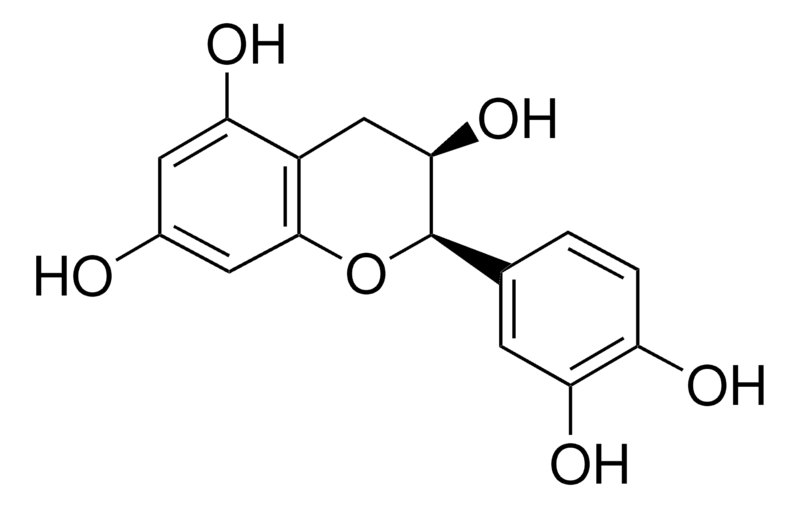
Epicatechin is a naturally occurring flavanol-class polyphenol compound, widely present in green tea, cocoa, and a variety of plant-based foods. It stands as a representative bioactive component within the tea polyphenol system. As the naturally existing (-)-Epicatechin configuration, its efficacy in areas including muscle metabolism, antioxidant activity, vascular health, and cell signal regulation has been validated by extensive research.
In recent years, with the rapid growth of products related to sports nutrition, healthy aging, and muscle function support, high-purity Epicatechin has garnered widespread attention due to its potential to regulate myostatin. It has thus emerged as a key active ingredient in functional dietary supplements.
| Test Items | Specifications | Test Method |
|---|---|---|
| Assay (Epicatechin, on dry basis) | 90.0% Min | HPLC |
| Caffeine | 1.0% Max | HPLC |
| Loss on drying | 5.0% Max | USP |
| Ash | 5.0% Max | USP |
| Sieve analysis | 95% pass 40 mesh | USP |
| Pb | 1.0ppm Max | ICP-MS |
| As | 1.0ppm Max | ICP-MS |
| Microbiology Control | ||
| Total Plate Count | 1000cfu/g Max | USP |
| Yeast&Mold | 100cfu/g Max | USP |
Derived from premium green tea leaves through carefully controlled extraction and purification processes, our Epicatechin retains the naturally occurring (-)-Epicatechin isomer, meeting the growing global demand for naturally sourced botanical ingredients.
Advanced purification and separation technologies ensure a consistently high Epicatechin content of ≥90%, providing excellent batch-to-batch consistency and supporting precise formulation development.
With 95% passing through a 40-mesh sieve, the powder offers outstanding flowability and compatibility for a wide range of dosage forms, including capsules, tablets, stick packs, and powdered beverage formulations.
The caffeine content is carefully controlled to minimize stimulant-related effects, making it an ideal ingredient for sports nutrition, healthy aging, cardiovascular health, and daily wellness products.
Produced entirely at AIDU Biotech's GMP-compliant manufacturing facility, our Epicatechin is manufactured under a comprehensive quality management system. The product is Non-GMO, Solvent-Free, and Gluten-Free, with every batch undergoing rigorous identity, purity, potency, heavy metals, and microbiological testing to meet the quality requirements of major international markets, including the United States and Europe.
Emerging research suggests that (-)-Epicatechin may help support skeletal muscle growth and function by modulating key regulators involved in muscle development, including myostatin and follistatin. This mechanism has been associated with improvements in muscle strength, exercise performance, and healthy aging.
Studies indicate that Epicatechin may support mitochondrial function and oxidative metabolism, helping optimize cellular energy production, exercise endurance, and post-exercise recovery. These properties make it a promising ingredient for sports nutrition and active lifestyle formulations.
As a naturally occurring flavanol, Epicatechin exhibits potent antioxidant activity and has been shown to support endothelial function by promoting endothelial nitric oxide synthase (eNOS) activity and nitric oxide (NO) production. This may help improve vascular function, healthy circulation, and overall cardiovascular wellness.
Epicatechin helps combat oxidative stress by neutralizing free radicals and supporting the body's endogenous antioxidant defense system, contributing to healthy aging and long-term cellular health.
1,Myostatin Inhibition and Muscle Strength Enhancement (Human Study)
In a 2014 study published in the Journal of Nutritional Biochemistry, Gutierrez-Salmeán et al. were the first to demonstrate in human populations that (-)-Epicatechin can significantly reduce serum Myostatin levels and improve the grip strength of subjects, providing key scientific support for its application in the fields of muscle health and sports nutrition.
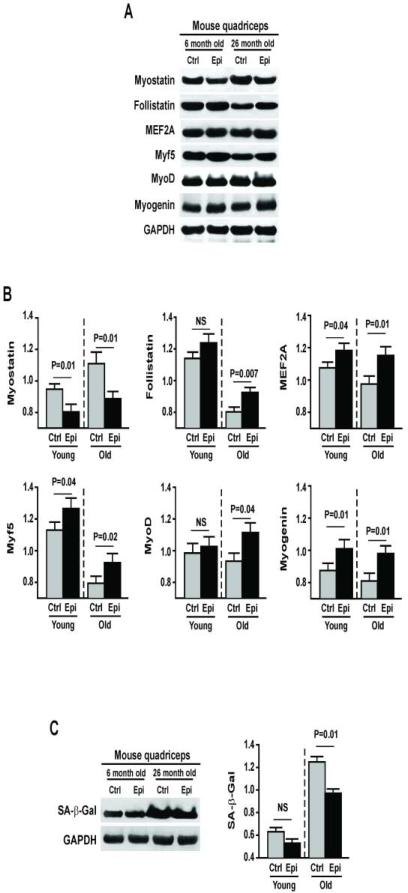
Differences observed in SkM growth/differentiation and SA-β-Gal protein levels in young and old control or (−)-epicatechin treated mice. Panel A shows Western blot images observed in myostatin, follistatin, MEF2A, Myf5, MyoD, myogenin. Panel B plots the mean ± SEM densitometric units of the protein of interest normalized over GAPDH values. Panel C denotes differences observed in senescence associated-β-Gal protein levels. (n=5/group).
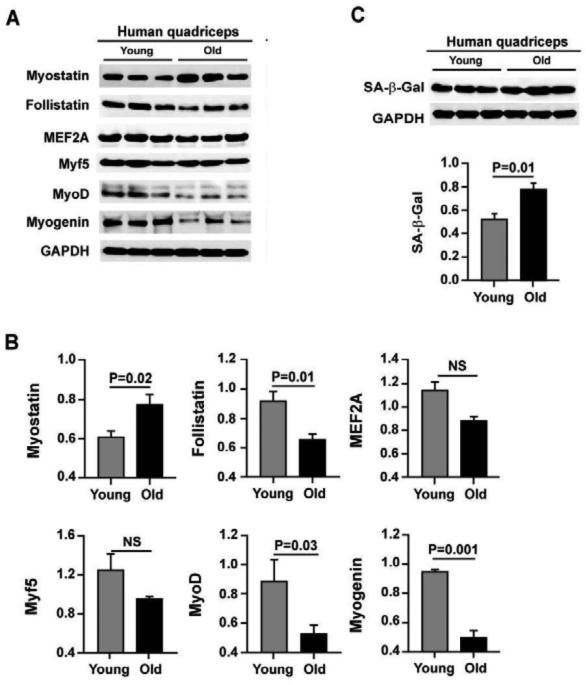
Differences observed in markers of muscle growth, in older vs. young human subjects, and effects of 1 week (−)-epicatechin treatment on strength and SkM growth markers in middle age subjects. Panel A shows Western blot images for myostatin, follistatin, MEF2A, Myf5, MyoD, myogenin protein levels in human quadriceps from young vs. old subjects. Panel B plots the mean ± SEM densitometric units of the protein of interest normalized over GAPDH values. Panel C denotes differences observed in senescence associated-β-Gal protein levels. (n=5/group).
*References: https://pubmed.ncbi.nlm.nih.gov/24314870/; https://doi.org/10.1016/j.jnutbio.2013.09.007;
2,Epicatechin and Molecular Regulatory Mechanisms in Skeletal Muscle
The study also demonstrates that Epicatechin can modulate multiple molecular signaling pathways associated with skeletal muscle growth and differentiation, lending robust support to the scientific rationale for its use as a muscle function nutrient.
*Reference: https://www.sciencedirect.com/science/article/pii/S0955286313002076
Target Consumers: Athletes, bodybuilders, and strength-training enthusiasts
Recommended Combination:
Epicatechin
Phosphatidic Acid (PA)
L-Leucine
Recommended Dosage Forms: Capsules, tablets, or powdered drink mixes
Target Consumers: Individuals seeking metabolic support and healthy glucose metabolism
Recommended Combination:
Epicatechin
Berberine or Dihydroberberine (DHB)
Recommended Dosage Forms: Tablets or capsules
Target Consumers: Pre-workout users and active individuals
Recommended Combination:
Epicatechin
L-Citrulline
Grape Seed Extract
Recommended Dosage Forms: Pre-workout powder or stick packs
Target Consumers: Adults aged 35+ focused on healthy aging, vitality, and recovery
Recommended Combination:
Epicatechin
NMN
Coenzyme Q10
Pterostilbene
Recommended Dosage Forms: Capsules
Target Consumers: Men's performance & sports nutrition
Recommended Combination:
Epicatechin
Laxogenin
3,3'-Diindolylmethane (DIM)
Horny Goat Weed Extract
L-Arginine Nitrate
Recommended Dosage Forms: Capsules, tablets, or pre-workout powder.
Packaging Specifications: 25 kg/fiber drum, or customized as per customer requirements
Storage Conditions: Store in cool and dry place, in a well-close container, keep away from strong light and heat.
Shelf Life: 24 months
Our epicatechin is extracted from green tea leaf (Camellia sinensis) and retains the naturally occurring (-)-epicatechin isomer, standardized to 90% minimum by HPLC.
Caffeine is controlled at 1.0% maximum by HPLC, keeping stimulant effects minimal for sports nutrition and daily wellness formats.
Produced in a GMP-compliant facility; every batch is tested for identity, purity, potency, heavy metals and microbiology, and the product is Non-GMO, solvent-free and gluten-free. Batch COA is supplied with each shipment.
25 kg fiber drums, or customized packaging. For MOQ, samples and pricing — including delivery from our Los Angeles, CA warehouse — contact idusc@aidubio.com.
Tell us the ingredient and volume you need. Our team will respond with pricing, lead time and documentation.